




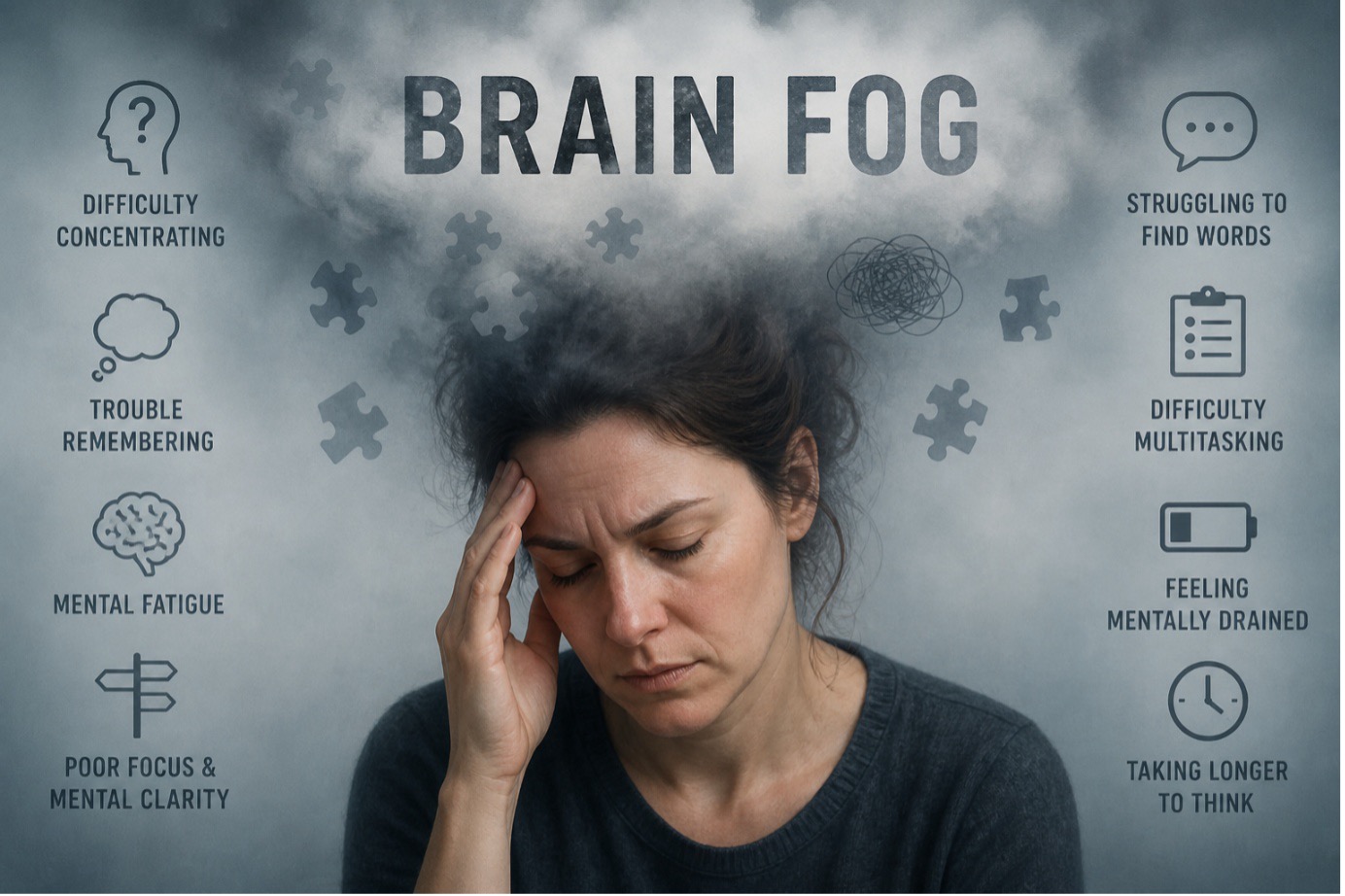
If you live with chronic pain, you may recognise this experience: you walk into a room and forget why you are there, lose track of conversations halfway through, or find that words sit just out of reach, like books on a high shelf. You may feel slow, unfocused, and mentally exhausted. Many people describe this simply as “brain fog.”
It is frustrating, and at times it can feel worrying. Perhaps most unhelpfully, it can feel like a personal failing. It is not. Brain fog is not a sign that you are lazy, unintelligent, or “losing it.” In many cases, it is a predictable and understandable consequence of living with persistent pain.
Pain is not just a physical sensation; it is an experience constructed and managed by the brain. When pain becomes chronic, the brain is constantly processing signals, evaluating potential threat, and attempting to regulate the body. This ongoing activity requires cognitive resources. You might think of your brain as having a limited bandwidth. Chronic pain is like running a demanding application in the background all day, leaving less capacity available for memory, attention, and decision-making.
Sleep also plays a significant role. Many people with chronic pain experience disrupted sleep, whether that is difficulty falling asleep, frequent waking, or waking unrefreshed. Sleep is essential for memory consolidation, attention, and emotional regulation. When sleep is poor, cognitive functioning declines, and brain fog often becomes more noticeable.
There is also the emotional load of living with chronic pain. Ongoing discomfort often brings uncertainty, frustration, and sometimes fear or low mood. Chronic stress can increase cortisol levels, which over time can affect concentration, memory, and mental flexibility. In this context, the brain prioritises managing perceived threat over maintaining sharp thinking.
Medication can contribute as well. Some commonly prescribed treatments for chronic pain, including certain antidepressants, anticonvulsants, and opioid medications, may lead to cognitive slowing or reduced mental clarity. This does not mean these treatments are inappropriate, but it does mean brain fog may be part of the overall picture.
Attention itself is another factor. Pain naturally draws focus. Even when it sits in the background, part of your awareness is continually monitoring it. This reduces your ability to concentrate fully, hold information in mind, and stay present in tasks.
Although there is no single solution, there are practical, evidence-informed strategies that can help improve clarity and day-to-day functioning. One of the most effective approaches is to reduce cognitive load. When your mental bandwidth is limited, the goal is not to push harder but to reduce demand. This might involve writing things down rather than relying on memory, breaking tasks into smaller steps, and maintaining simple, consistent routines.
For example, Sarah, aged 32 and living with chronic pelvic pain, found daily life increasingly overwhelming. She stopped trying to hold everything in her head and instead began writing a short daily plan of just three to five tasks. She used reminders on her phone and prepared what she could the evening before. Within a couple of weeks, she reported feeling less scattered and more in control. The change did not come from improving her memory directly, but from reducing the demands placed on it.
Another helpful approach is attention training. Pain tends to pull attention inward, so deliberately practising directing attention outward can help rebalance this. This can be as simple as choosing an anchor, such as your breath, the sounds around you, or the sensation of your feet on the floor. When your mind drifts, which it will, you gently bring it back. The aim is not perfect focus, but repeated practice.
Mark, aged 48 and living with chronic back pain, described feeling mentally absent at work. He began taking short, two-minute breaks to reset his attention by noticing sounds around him and returning his focus when distracted. Over time, he reported fewer moments of mental “blankness” and an improved ability to stay engaged with tasks.
Pacing is also important, not just physically but cognitively. Signs that you may be exceeding your cognitive limits include increasing mistakes, difficulty finding words, and feeling irritable or overwhelmed. Rather than pushing through, it can help to work in shorter, focused periods, such as twenty to thirty minutes, followed by planned breaks before fatigue sets in.
Amira, aged 41, noticed that trying to push through brain fog often led to more severe crashes later in the day. She shifted to working in structured blocks with regular breaks away from screens. As a result, her overall productivity improved because she was working within her limits rather than against them.
Improving sleep, where possible, can also make a meaningful difference. While pain may not be fully controllable, sleep habits often can be adjusted. Keeping consistent sleep and wake times, introducing a calming wind-down routine, and reducing the effort spent trying to force sleep can all support better rest. Even small improvements in sleep quality can have a noticeable impact on cognitive clarity.
Another useful strategy is to externalise memory. When working memory feels unreliable, it helps to move information outside of your head. Using notes, planners, whiteboards, or voice memos can reduce the need to remember everything mentally. This is not a weakness; it is an adaptive and effective way of functioning.
It is also important to maintain some level of cognitive activity. When thinking feels difficult, there can be a tendency to withdraw from mentally engaging tasks altogether. However, gentle cognitive stimulation, such as light reading, puzzles, or structured conversations, can help maintain mental function. The key is to start small and build gradually.
Finally, it is worth considering the emotional response to brain fog itself. Frustration and self-criticism can make cognitive difficulties worse. Thoughts such as “I am useless” or “I cannot think straight anymore” increase stress and further reduce cognitive capacity. A more helpful approach is to notice these thoughts, recognise them as understandable reactions, and gently redirect your focus back to the task at hand.
Brain fog in chronic pain is not random. It reflects the combined effects of cognitive load, disrupted sleep, ongoing stress, and the brain’s adaptation to persistent pain. While it may not disappear entirely, it can be improved.
When brain fog shows up, many people respond by pushing harder, criticising themselves, or giving up. None of these approaches tend to help. A more effective response is to understand the system you are working with and adapt to it. Your brain is not failing; it is responding to sustained demand.
Clarity does not usually come from forcing the brain to work harder, but from creating the conditions in which it can function more effectively.