




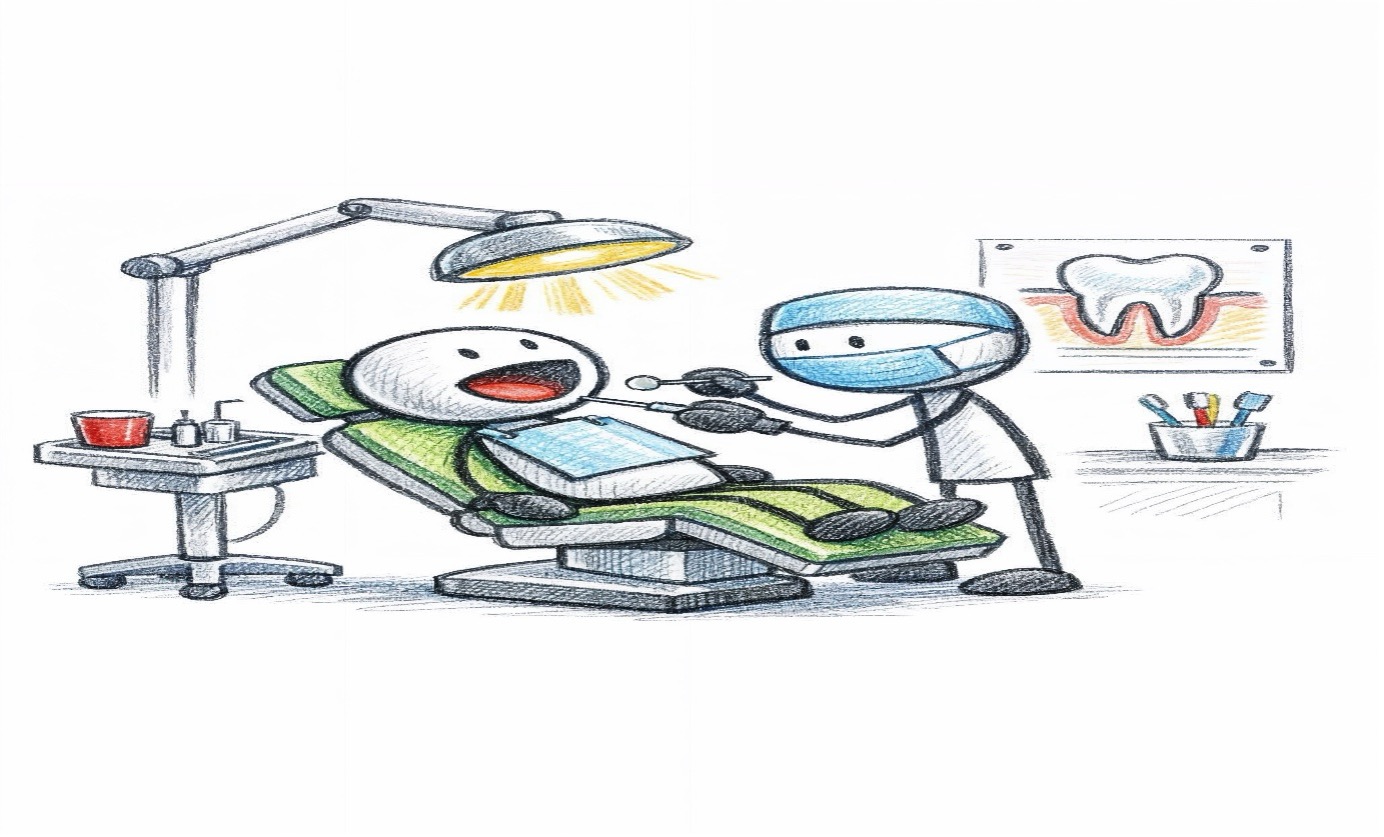
As I was people watching in the dentist waiting room a few weeks ago, it struck me that there is something quietly unsettling about the dental chair.
It isn’t just the position – reclined, exposed, unable to speak – or the bright light that can feel more like interrogation than healthcare. It’s the experience of having to remain still while something is being done to you. For many people, that creates a sense of vulnerability.
If you live with chronic pain, that feeling can be amplified. This isn’t just about teeth. It’s about how your nervous system interprets the experience.
Very few people actively enjoy going to the dentist. Even those who cope well with other physical or emotional challenges often notice a shift the moment they sit in that chair. There is an anticipatory tension. A readiness. A sense of bracing for what might come next.
This happens because dental treatment is not simply a physical experience. It is sensory, psychological, and closely tied to control. The sound of the drill, the anticipation of discomfort, the inability to speak freely, and the unfamiliar sensations all combine to create a situation where your brain starts making predictions.
If your nervous system is already sensitised by chronic pain, those predictions tend to be stronger and faster. You might notice thoughts such as this will hurt, I won’t be able to cope, or I’ll feel trapped. These are not just thoughts in isolation. They trigger physical responses. Muscles tighten. Breathing becomes shallow. Your body shifts into a more protective state. And when the body is in that state, pain sensitivity often increases.
This is not a failure on your part. It is your nervous system doing its job.
The difficulty is that this protective response can make the experience feel more intense than it needs to be. It is therefore entirely understandable that many people respond by avoiding the dentist altogether. Appointments get postponed. Check-ups are delayed. Problems are ignored for as long as possible. In the short term, this reduces anxiety. But over time, it tends to reinforce the idea that dental care is something to fear. And that often makes future visits even harder.
So what is the alternative?
One approach is to begin working with your mind rather than against it.
Pain and anxiety are not determined solely by what is happening in the body. They are shaped by how the brain processes and interprets those experiences. This means that changing your internal focus can change how something feels.
This is where clinical hypnosis can be helpful. I often see people in my pain psychology clinic both online and in-person in Milton Keynes for hypnodontics (hypnosis for various dental issues, including fear of the dentist).
Despite its reputation, hypnosis is not about losing control or being “put under.” It is better understood as a state of focused attention. You may recognise it from everyday life – becoming absorbed in a book, drifting into thought during a familiar journey, or losing track of time while concentrating on something engaging. Hypnosis uses this natural ability deliberately.
Through guided relaxation and focused attention, the body begins to settle. Breathing slows. Muscles soften. The nervous system moves out of high alert. At the same time, your attention shifts away from the immediate environment. The dental procedure is still happening, but it becomes less central in your awareness.
And when something feels less threatening, the brain often reduces the intensity of the experience, including pain.
Importantly, this is not about surrender. You remain aware and in control throughout. You can stop at any point. What changes is not your autonomy, but your relationship with what is happening.
For people living with chronic pain, that distinction matters. Pain can often feel like something imposed on you, something outside your influence. Learning that you can shape your internal experience, even slightly, can be both empowering and practical.
Of course, no technique works in isolation. Feeling safe with your dentist and the clinical environment is essential. Trust allows your nervous system to settle enough for any strategy to be effective. Clear communication, pacing, and a collaborative approach all contribute to making the experience more manageable.
The key message is this: your response to the dentist makes sense. It reflects a nervous system that has learned to be protective. But it is also a response that can be influenced.
The dental chair may never become comfortable in the way your own sofa is. But it does not have to feel overwhelming.
With the right understanding and the right tools, it can become something you can manage.
If this resonates with you, consider starting with small changes. Before your next appointment, spend a few minutes practising slower, steadier breathing. Notice where you hold tension in your body and gently allow it to soften. Even small shifts can begin to change how your nervous system responds.
If you would like more structured support, working with a clinician trained in psychological approaches to pain, including clinical hypnosis, can help you develop these skills further.
You do not have to simply endure these experiences.
There are ways to change how they feel.
And that is something worth exploring.