




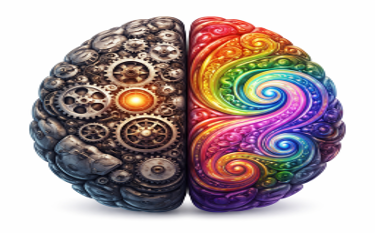
Brain Activity During Hypnotic States
Hypnosis is a state of highly focused attention, increased suggestibility, and reduced peripheral awareness.
Now, modern brain‑imaging technologies, such as functional magnetic resonance imaging (fMRI) and electroencephalography (EEG), allow scientists to see how hypnotic states influence neural activity. The picture that emerges is of a focused and altered state of awareness in which the brain behaves quite differently from its patterns of waking, sleep or unconsciousness.
The hypnotic state is usually induced by guiding someone into deep relaxation and concentration, often through verbal suggestions and imagery. What is remarkable, from a neuroscientific perspective, is how this process changes the way different parts of the brain communicate with one another.
Findings from EEG Studies
Long before brain scanners existed, researchers recorded brain waves using EEG. These studies in the mid‑20th century hinted that hypnosis alters electrical rhythms, especially in the alpha and theta brain wave ranges. Alpha waves, associated with calm wakefulness, often increase during hypnosis, while theta waves — linked to drowsiness, meditation, and inward focus — also rise. This suggested that hypnosis occupies a unique middle ground between full alertness and drowsy relaxation.
However, EEG offers a limited view: it captures changes in surface electrical activity but can’t show which brain regions are interacting. These discoveries had to wait for modern imaging techniques such as MRI.
Insights from Functional MRI
Functional MRI tracks brain activity by measuring changes in blood oxygenation — a reliable proxy for neural activity. In the past two decades, a number of fMRI studies have shed light on what happens in the hypnotised brain.
One of the most consistent findings is altered connectivity in the brain’s default mode network (DMN) — a group of regions active when the mind is at rest or daydreaming. The DMN includes the medial prefrontal cortex and posterior cingulate cortex, areas involved in self‑reflection and the sense of personal identity. Under hypnosis, activity within this network decreases, and communication between its hubs becomes less synchronised. In other words, the brain appears to quiet the chatter of self‑consciousness, allowing attention to turn inward more completely.
Studies also reveal stronger connectivity between regions that regulate attention, such as the dorsal anterior cingulate cortex (ACC), and those that govern executive control, such as the prefrontal cortex. This heightened co-operation may explain the deep focus and responsiveness to suggestion seen under hypnosis. The brain seems to enter a state where top‑down control (our ability to direct attention) becomes highly effective, while distracting thoughts lose their grip.
Changes in Sensory Processing
Hypnosis doesn’t merely alter attention; it can change how the brain experiences sensations. In experiments where hypnotised volunteers were told that their hands were numb, fMRI scans showed reduced activity in the region responsible for processing touch and pain. When told to feel pain more intensely, the same area lit up more strongly. Remarkably, these changes occur even though no physical stimulus has changed — only the brain’s interpretation of it.
This demonstrates that hypnotic suggestions can genuinely modulate sensory processing, rather than merely altering how a person reports sensations. In effect, the brain behaves as though the suggestion were fact. This insight helps explain how hypnosis can reduce pain perception without drugs — a finding now applied in clinical settings, from dentistry to childbirth.
The Role of the Anterior Cingulate Cortex
Among the brain regions consistently linked to hypnosis, the anterior cingulate cortex (ACC) stands out. The ACC sits deep within the frontal lobe and plays a key role in regulating attention, conflict monitoring, and emotional response. Under hypnosis, activity in this area often shifts depending on the suggestion given.
When people experience hypnotic analgesia (pain reduction), for example, the ACC shows diminished activation, mirroring the reduced emotional distress associated with pain. Conversely, when a suggestion induces strong imagery or emotional vividness, the ACC becomes more active. This flexibility highlights how hypnosis can tune the brain’s control systems to adjust perception and emotion.
Diminished Sense of Agency
Another intriguing effect of hypnosis is the temporary alteration of “agency” — the feeling that one’s actions and experiences are self‑generated. People under hypnosis may report that their arm “moves by itself” or that they “can’t help” following a suggestion. Neuro-imaging suggests that this occurs because communication between the prefrontal cortex (responsible for planning actions) and parietal areas (which monitor bodily position and movement) becomes less integrated. The brain effectively separates intention from movement, producing the authentic impression that an action happens automatically.
Interestingly, similar dissociations appear in certain neurological or psychiatric conditions, such as depersonalisation or functional movement disorders. Studying hypnosis therefore offers a safe model for understanding how the brain constructs the sense of voluntary control.
Individual Differences
Not everyone is equally hypnotisable, and neuroscience has begun to reveal why. Highly hypnotisable people show distinct patterns even at rest. They tend to have stronger functional connectivity between prefrontal attentional regions and the ACC, suggesting a brain naturally predisposed to focused absorption. They also show less rigid separation between the networks governing external attention and internal imagination. This may make it easier for them to blend suggestion with perception.
In contrast, people with low hypnotic responsiveness often maintain stronger DMN activity and find it harder to suspend self‑monitoring. These differences seem to reflect stable traits rather than momentary moods.
Hypnosis and the Brain’s Narrative
Taken together, these findings suggest that hypnosis reorganises the brain’s communication patterns rather than simply activating or deactivating isolated areas. The hypnotic state reduces self‑referential thinking, enhances top‑down attention, and allows suggestions to influence perceptual circuits more directly. In essence, hypnosis loosens the brain’s usual hierarchy — softening critical evaluation and opening a more flexible channel between imagination and sensory experience.
You might think of ordinary consciousness as a committee meeting: various networks debate inputs, evaluate evidence, and reach consensus. Under hypnosis, that committee becomes quieter and more unified. One voice — the guiding suggestion — can steer the conversation with less opposition.
Clinical and Theoretical Implications
Understanding the neural basis of hypnosis has practical value beyond curiosity. Hypnotherapy has proven effective for pain management, anxiety reduction, and certain habit changes, such as smoking cessation. Brain imaging now helps refine these techniques by identifying which suggestions engage pain networks or emotional circuits most effectively. It also provides an objective measure of how genuine the hypnotic state is, countering the argument that it’s merely “acting” or placebo.
From a theoretical angle, hypnosis challenges rigid boundaries between imagination and perception. It shows that our sensory world is constantly shaped by expectation, attention, and belief — processes that neuroscience is only beginning to map. In fact, some researchers view hypnosis as a window into wider questions of consciousness: how the brain constructs reality, how attention shapes experience, and how voluntary control is maintained.
Although great progress has been made, many mysteries remain. Scientists are still debating whether hypnosis represents a discrete altered state or a strong form of focused attention within normal consciousness. Advanced imaging combined with computational modelling and even machine learning may soon clarify these questions.
Another frontier involves combining neuro-imaging with virtual reality and brain stimulation. These tools could artificially reproduce aspects of hypnotic absorption, potentially offering new therapies for pain, trauma, and anxiety without medication. As ethical and technical debates continue, one thing seems clear: hypnosis provides an extraordinary natural experiment for exploring how thought and suggestion sculpt brain activity in real time.
Get in touch
I hope this discussion has helped to clarify these ideas and perhaps sparked curiosity for further exploration. If you would like me to address a particular topic or expand on any aspect of this series, please feel free to get in contact.
Coming next
In the second of our series on Neuroscience and Hypnosis, we will focus on neuroplasticity and its implications for hypnotherapy.